
From 18 to 20 May 2026, African Desk took an active part in the third edition of Biashara Afrika, the business forum of the African Continental Free Trade Area (AfCFTA), held at the Palais des Congrès in Lomé, Togo. Our Executive Chairman, Patient Sayiba Tambwe, spoke in his capacity as a Member of the Board of Directors of the AfCFTA Adjustment Fund. His core message: make corridors the true driver of intra-African trade, and give the AfCFTA an authority to manage them.
Lomé, capital of the African single market
Officially opened on 18 May 2026 by H.E. Faure Essozimna Gnassingbé, President of the Council of the Togolese Republic, this third edition of Biashara Afrika was co-organised by the AfCFTA Secretariat and the Government of Togo. Its theme was “Powering Africa’s Economic Transformation through the AfCFTA”.
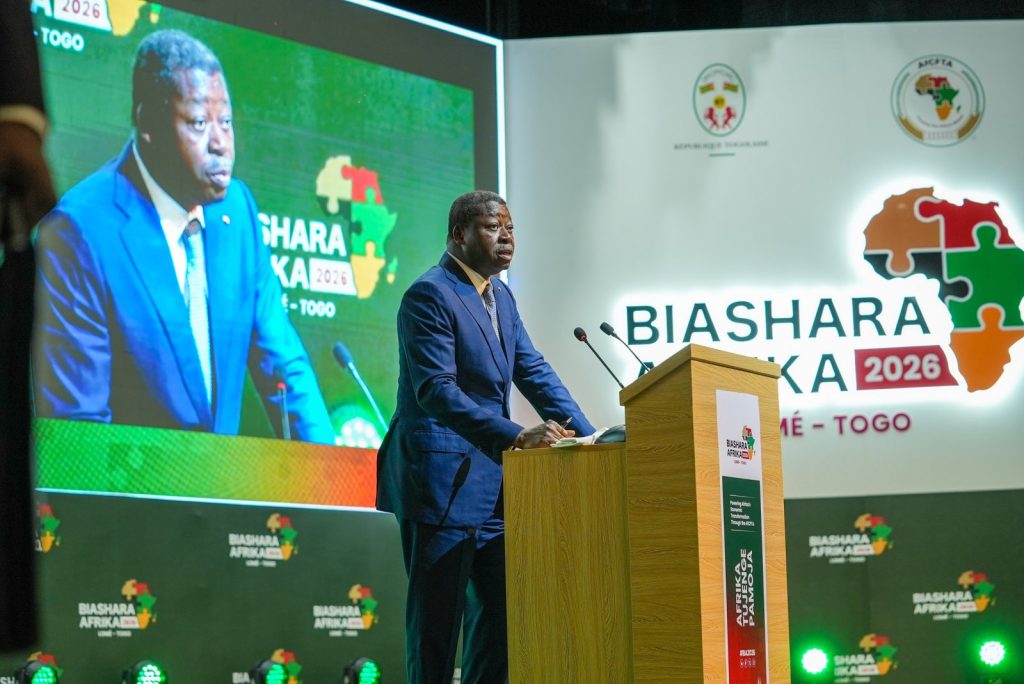
After Johannesburg in 2023 and Kigali in 2024, the forum came to West Africa for the first time. It recorded its highest participation to date, with more than 1,900 delegates: heads of state, ministers, financial institutions, investors, logistics operators and entrepreneurs from across the continent.
Over three days, the discussions focused on one imperative: moving from signed agreements to concrete implementation. Regional value chains, trade facilitation, cross-border payments and SME financing were all on the agenda, with infrastructure and transport corridors at the forefront.
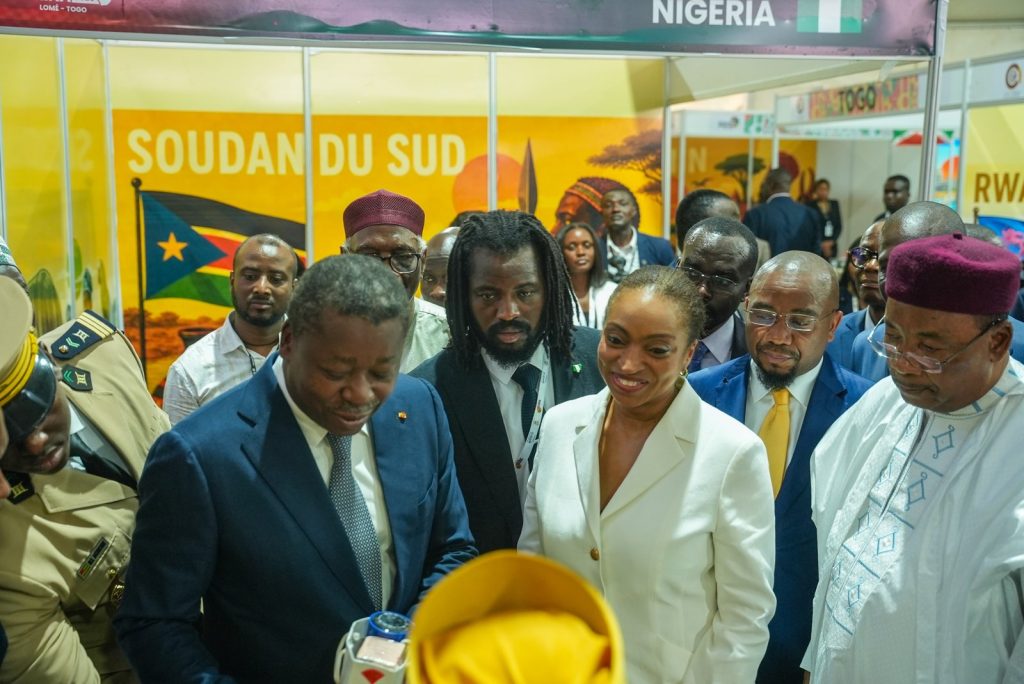
A voice for the private sector and the Adjustment Fund
Patient Sayiba Tambwe came to Lomé with a dual mandate. As Executive Chairman of African Desk and Congo Trade Solutions, he led both companies’ delegations, which came to share practical solutions for improving cross-border logistics and making transport corridors run more smoothly.
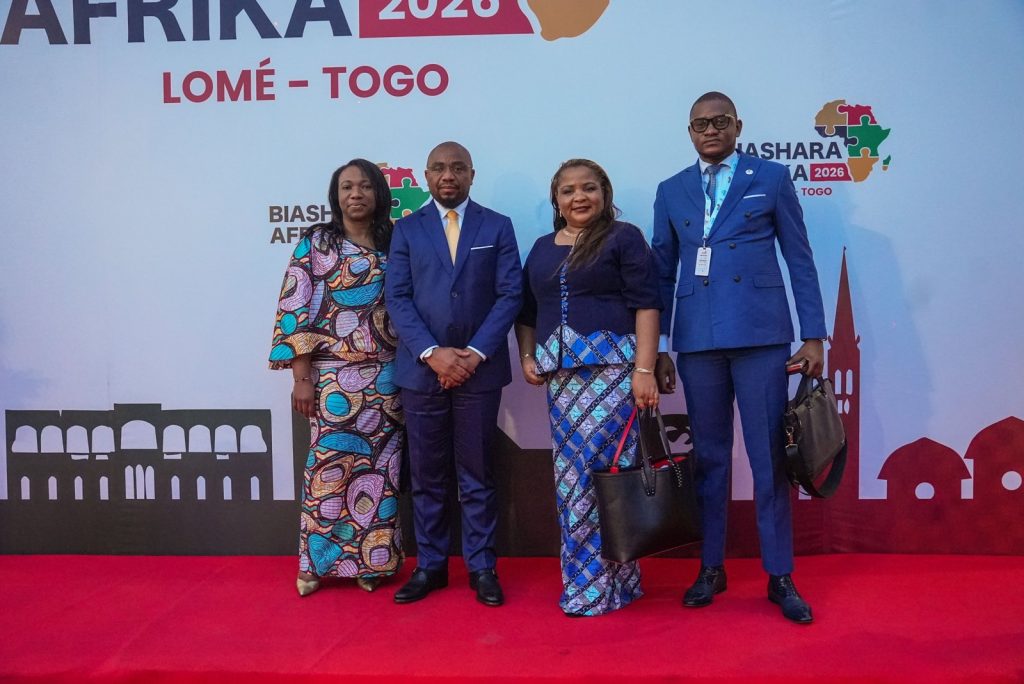
Since September 2023, he has also sat on the Board of Directors of the AfCFTA Adjustment Fund, the instrument set up by the AfCFTA Secretariat and Afreximbank to help States and the private sector integrate into the continental market. It was in this capacity that he spoke as a panellist.
This dual position is a real asset: it connects those who decide on financing with those who move the goods. It draws on more than fifteen years of experience in trade facilitation and transport corridor management, from his tenure as Director General of OGEFREM (the DRC’s Multimodal Freight Management Office) to the presidency of the Union of African Shippers’ Councils.
Rethinking African corridors
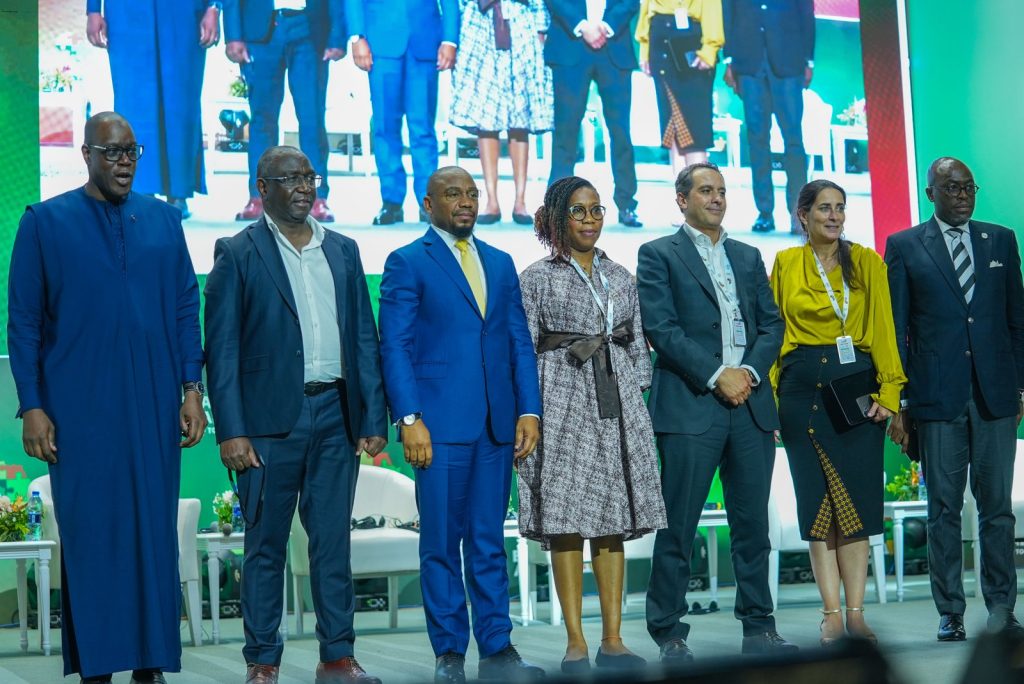
On 19 May, the second day of the forum, Patient Sayiba Tambwe took part in the high-level panel “Connecting Africa – Infrastructure, Ports, Corridors and the Future of African Trade”. He opened with a simple principle:
“The strength of pragmatism lies in implementing all the measures we adopt.”
In his view, one of the AfCFTA’s goals, as a pillar of Agenda 2063, is to make Africa a single economy. Yet a border remains a barrier, even when it is equipped with a one-stop border post. We therefore need to look further ahead and think differently. He put forward two strong ideas.
Redefine how we think about corridors. Our corridors were designed to link ports to the hinterland: to import finished goods and export raw materials. If Africa wants to promote intra-African trade, corridors must connect African countries to one another, by road, rail, pipeline and even aqueduct. He cited the drying-up of Lake Chad: tomorrow, water could be carried from countries where it is abundant, such as the DRC.
Make economic operators true partners. Transporters and port and logistics operators are not mere users of public infrastructure. Corridors are the African economy itself, and they must rest on public-private partnership. The private sector should be encouraged to invest in roads, railways and logistics hubs, including inland and not only around ports.
The AfCFTA Secretariat highlighted this statement in its official communication on the panel:
“African economic operators are not mere users of trade corridors, but strategic partners with the potential to invest in infrastructure development. The AfCFTA provides the framework to enable that.”
He concluded on the role of the Adjustment Fund: to steer more financing towards the infrastructure that drives intra-African trade.
A formal proposal: an authority to manage African corridors
The highlight of his intervention was a proposal addressed directly to the AfCFTA Secretariat:
“I would like to make a formal suggestion to the AfCFTA Secretariat: to establish, at the level of the AfCFTA, an authority for the management of African corridors, with a centralised monitoring and evaluation dashboard bringing together the activities of all corridors.”
Today, each African corridor is managed separately, by its own bodies and with its own indicators. An authority under the aegis of the AfCFTA would make it possible to coordinate all these routes at continental level.
The centralised dashboard would be its core tool. It would provide a shared view of the performance of every corridor: transit times, costs, border crossings and progress on infrastructure projects. States, investors and operators would then have a common basis on which to decide, compare and invest.
This proposal is in line with African Desk’s mission since its founding: to promote the efficiency of the continent’s multimodal transport corridors and Regional Economic Communities through research, capacity building and the sharing of best practices.
The Adjustment Fund at the service of the private sector
On the sidelines of the forum, Patient Sayiba Tambwe gave an interview to Africa24 television, broadcast on 23 May 2026, on the financing mechanisms of the AfCFTA Adjustment Fund.
“The AfCFTA Adjustment Fund is placing itself at the service of the African private sector, giving it a financial tool capable of supporting and financing its activities.”
He recalled the concern shared by many States: losing customs revenue by joining the AfCFTA. The Fund addresses this concern by financing intra-African production, processing and exports, so that countries diversify their economies rather than depend on customs duties. “We will no longer speak of African economies, but of the African economy,” he summed up.
In practice:
- Economic operators submit bankable projects, which the Fund’s credit committee reviews case by case, assessing their viability and risks.
- Several African operators have already received disbursements.
- The minimum ticket, initially set at more than one million dollars, effectively shut out SMEs. The Board of Directors has proposed to Afreximbank and the AfCFTA Secretariat that it be lowered, opening the Fund to financing of 50,000, 100,000 or 200,000 dollars, notably through AfCFTA trading companies.
His message to States is clear: with the Adjustment Fund in place, falling customs revenue can no longer justify inaction.
What comes next
“The third edition of Biashara Afrika has come to a close. We were honoured to take an active part in it and to contribute, by sharing ideas and exchanging with many stakeholders, to advancing the irreversible process of African economic integration,” Patient Sayiba Tambwe reflected at the end of the forum.
African Desk intends to carry this work forward. We remain available to the AfCFTA Secretariat, Member States, Regional Economic Communities and our partners to contribute to the thinking on a continental corridor management authority and its monitoring tools. We will continue to support economic operators who want to invest in corridors and benefit from AfCFTA mechanisms.